



News
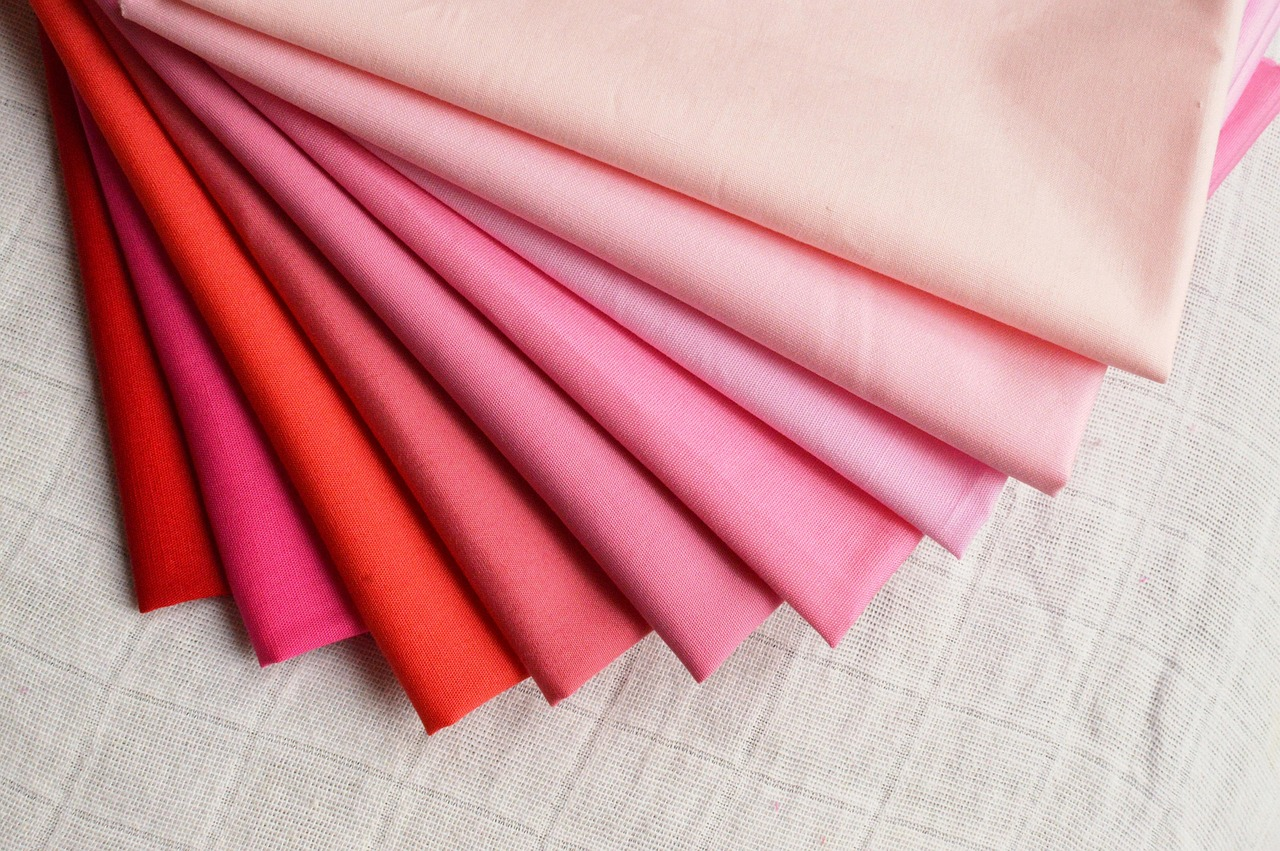
Cotton print fabric is practical and versatile. It can come as a high-fashion blouse or a scrappy little pouch for your niece. The options are endless.
2025
08
01
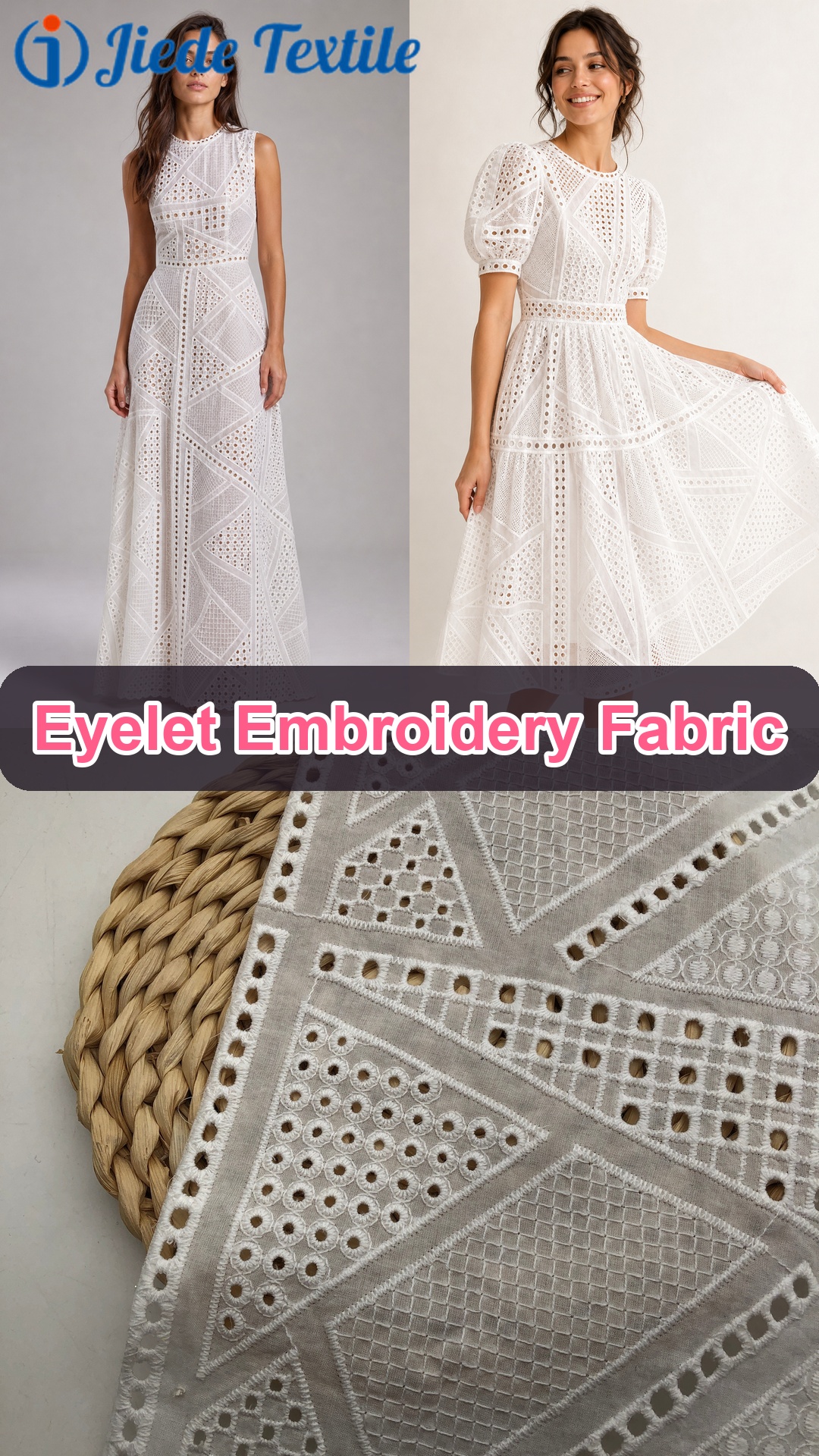
Eyelet embroidery — also called cut-out or perforated embroidery, and known historically as broderie anglaise — is a compound embroidery technique. Using an eyelet punch or eyelet needle fitted to the embroidery machine, holes are formed in the fabric to the design; the rim of each hole is then immediately edged with thread so that the cut yarn ends are enclosed, and the solid areas of the design are worked with satin stitch outlines and dot or mesh fills.
Its core is the contrast of solid and void. A single surface carries both the solid flower — areas filled with stitching — and the open flower — the punched holes. The holes let light through and read as transparency; the built-up stitching reads as relief. From a distance the motif is complete; up close it is a texture in which thread and hole pass through one another. No plain embroidery or print can replace this: a print can only imitate the colour of a hole, whereas the hole in eyelet embroidery genuinely transmits light.
One distinction matters. Ordinary embroidery only adds thread to a surface; eyelet embroidery adds thread and breaks the surface at the same time. If a rim is not edged sufficiently, the yarns on either side of the hole will fray away. This is why the demands it places on digitising accuracy, machine condition and tension control are markedly higher than those of plain embroidery, and why this document concentrates on production points.
It should also be distinguished from mesh-based openwork. In embroidered tulle or water-soluble embroidery, the open area exists because the ground is a net or is dissolved away; in eyelet embroidery the hole is cut out of the fabric itself, so the finished cloth keeps the flatness and body of a woven base and the rim is locked by stitching into a crisp outline.
Its core is the contrast of solid and void. A single surface carries both the solid flower — areas filled with stitching — and the open flower — the punched holes. The holes let light through and read as transparency; the built-up stitching reads as relief. From a distance the motif is complete; up close it is a texture in which thread and hole pass through one another. No plain embroidery or print can replace this: a print can only imitate the colour of a hole, whereas the hole in eyelet embroidery genuinely transmits light.
One distinction matters. Ordinary embroidery only adds thread to a surface; eyelet embroidery adds thread and breaks the surface at the same time. If a rim is not edged sufficiently, the yarns on either side of the hole will fray away. This is why the demands it places on digitising accuracy, machine condition and tension control are markedly higher than those of plain embroidery, and why this document concentrates on production points.
It should also be distinguished from mesh-based openwork. In embroidered tulle or water-soluble embroidery, the open area exists because the ground is a net or is dissolved away; in eyelet embroidery the hole is cut out of the fabric itself, so the finished cloth keeps the flatness and body of a woven base and the rim is locked by stitching into a crisp outline.
2026
09
23
Crushed foil-stamped satin is made in three sequential stages: crush, laminate, then gild. First, a satin-weave base cloth — its long surface floats giving a continuous, mirror-like lustre — is crushed at high temperature, breaking that regularity into irregular refraction. Second, a light tulle is laminated to the reverse of the crushed satin, providing a stable supporting structure for the folds together with body and snag resistance. Third, transfer foil deposits metallic film only on the raised ridges of the crush. The result: metal on the ridges, satin shadow in the valleys — light and dark alternate and shift with the viewing angle.
The sequence cannot be reordered, and that is the core of the process. Crushing must precede lamination: the folds are “live”, and if the backing were already in place no clean three-dimensional crease could be formed between the two layers. Lamination must precede foil transfer: the tulle backing locks the already-set relief, so the surface cannot be pressed flat when the foil is applied and the gold line stays sharply on the ridges. This is also why the veining can never repeat and every metre is unique — the essential difference from a print imitating foil: a print is a printed pattern, whereas this is a real metallic layer lying on a real three-dimensional fold structure.
The sequence cannot be reordered, and that is the core of the process. Crushing must precede lamination: the folds are “live”, and if the backing were already in place no clean three-dimensional crease could be formed between the two layers. Lamination must precede foil transfer: the tulle backing locks the already-set relief, so the surface cannot be pressed flat when the foil is applied and the gold line stays sharply on the ridges. This is also why the veining can never repeat and every metre is unique — the essential difference from a print imitating foil: a print is a printed pattern, whereas this is a real metallic layer lying on a real three-dimensional fold structure.
2026
09
17
Sequin embroidery is one of the most expressive decorative techniques in dress fabrics today. On a light, sheer mesh base, a computerized sequin embroidery machine precisely sews glistening sequins one by one according to the design, creating raised, radiant patterns. This article walks you through the materials and the full manufacturing process behind mesh sequin embroidery.
2026
09
09
Voile is celebrated for its lightness, transparency and silky hand-feel, making it the base fabric of choice for summer dresses, blouses, sheer tops and gowns. When delicate voile meets precise embroidery, a fabric combining ethereal elegance with refined texture is born. Yet the sheerer the base fabric, the more demanding the craft. This article walks you through the full production journey of embroidered voile — from pre-embroidery preparation and embroidery techniques to post-treatment and dyeing — so that fashion brands can better understand what goes into every meter.
2026
08
31
2021
08
04
Cleaning, and maintaining beaded fabrics looks like a big job; but really, it is simply an easy method to keep your beaded fabric looking beautiful by executing this work.
2025
10
14
Some clothes reflect the light in such a way that you look twice. One of them is Lurex fabric. It gains its shine but not to the extent of feeling excessive. It instantly adds glam to a party dress or a scarf or even home decor.
2025
08
19
Jacquard is one of the textiles that are greatly appreciated because of their durability, complex designs, and the amount of use that it has. Learning how jacquard textile is produced, its types, and how to care about it, you will be sure of selecting the appropriate version of it in a new project.
2025
12
17
It is also important to learn how to clean or maintain and store embroidery fabric so that each work could be in good condition.
2025
12
17
It is much easier to choose the right silk when you know its main qualities and apply them to your project. You can get lasting and high-quality results by learning various varieties of silk material, preventing the selection mistakes and adhering to the right storage and maintenance techniques.
2025
12
17
Knitted fabrics are available in a large variety of types, each with advantages and purposes. Weft knitted fabrics are soft, stretchy, and wonderful for soft attire. Warp knitted fabrics are stable and fairly sturdy, and are suitable for items that require a structured or embellishing component. You can understand more specific subcategories and their applications in the knit fabric world.
2025
10
14
recommended for you
Jiede as one of the experienced apparel fabric manufacturer which can help you solve all your needs and problems in fashion fabrics.
QUICK LINKS
CONTACT US
Contacts: Candy
TEL: 86-18158661662
Email: candy@jiedetextiles.com
WhatsApp: 86 18158661662
Address: Room 6068, Building 9b, China Textile City Creative Park, No.199 Chuangyi Road, Keqiao, Shaoxing, Zhejiang, China.
Copyright © 2026 Shaoxing Jiede Textile Co.,Ltd. - www.jdfashionfabric.com |Sitemap